Ingrid Jacobs’ Journey With The Bag It Bag

Ingrid Jacobs’ Journey With The Bag It Bag

By Ingrid Jacobs

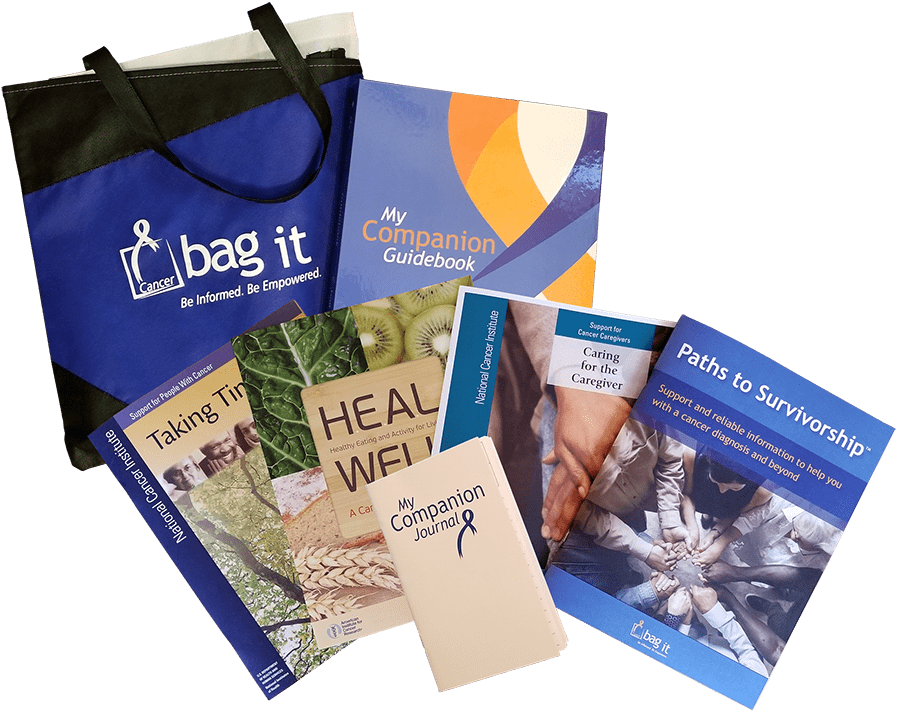
In February 2010, I picked up my Bag It bag at the Resource Center. I was still in shock with my colon cancer diagnosis and was a little dismissive of this bag and its contents.

When I had some quiet time, I looked through it and sorted out those things that directly affected me. By this time I had accumulated a number of providers’ business cards and other information pamphlets that I had in a pile. I also had copies from various doctors of my personal information. This unorganized collection prompted me to look at the binder more closely. Maybe it had something to offer.

The first thing I noticed in the binder was the clear plastic 10 pocket sheet that is intended for business cards. Yeah, I had plenty of those to fill the front and back of almost every pocket. That stayed right up front in my version of the binder. I often wished that I had a couple of those.

There was the encouraging letter from Sherri Romanoski, the founder of Bag It who had had cancer several years earlier. I think that I appreciate her desire to help more now then when I read her letter back in 2010. There were so many things going through my head at the time of my diagnosis and treatment. There were days I felt crappy. There were days I felt pretty good. I was scared and confused, but through it all, I had an extremely strong determination that kept me focused on what I needed to do. I also had the unwavering support of my daughter, her boyfriend, my 2 cats and a dog, a few cousins, and quite a few friends.

The various tabs in the binder caught my attention: Personal Information, Notes/Log/Calendar, Reports/Scans, Labs, and After Treatment. I had something for just about every tab. Hmmmm. . . not half bad. Somebody had put some real thought into this goody binder. I soon found myself putting papers behind the corresponding tabs. Then, I started to personalize it to fit my needs. I created my own tabs. Now I have my dated Chemo Logs and my Post-Chemo Logs. In between my chemo sessions I kept a log of what I was noticing, what I was doing to help myself, and questions I wanted to ask. Every two weeks, I took a copy of this log to my doctor to put into my file. She said that it was very helpful for her to read about these things because it actually helped her with my treatment plan.

Eventually, my original binder was bursting at the seams. I bought a second binder and created my own matching covers for both binders. I labeled them Arizona Oncology Logs and Labs #1 and #2. I know . . . clever and original. (giggle)

From my doctor, I learned that diet (including vitamins and supplements) was very important for more positive treatment results. I created a 3rd binder with corresponding information.  That’s a whole other part of the continuing saga of me taking better charge of my health.
Physical Activity Can Make a Difference

Physical Activity Can Make a Difference

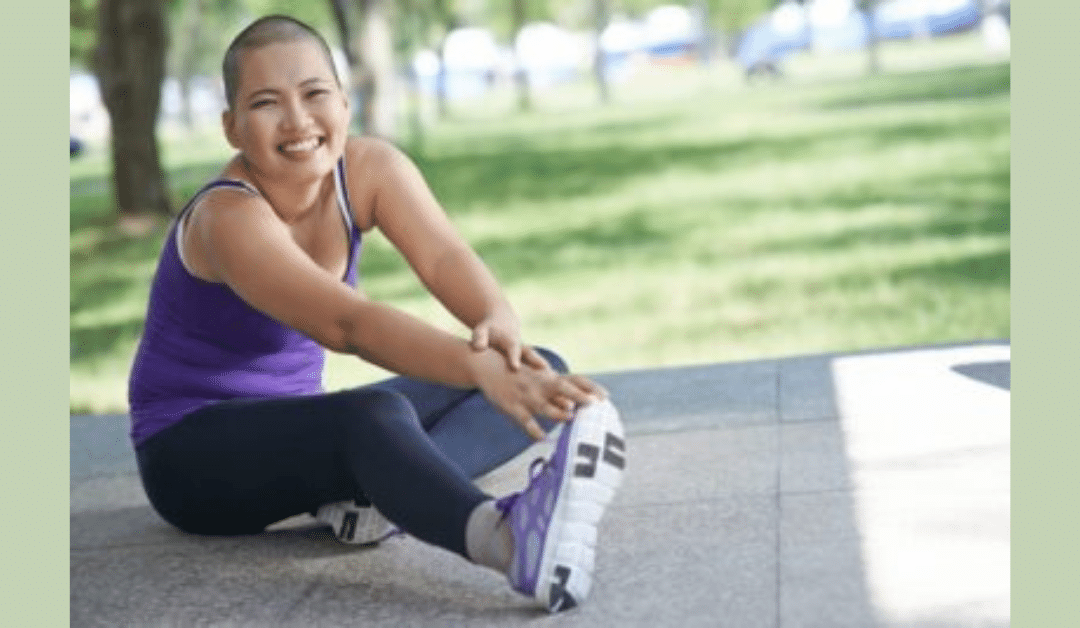
We are told over and over again about the benefits of physical activity, but many of us find lots of excuses not to do it, or not to do it consistently anyhow. Kudos to the many rockstars that embrace it and engage in some sort of activity on a consistent basis – please motivate us! Physical activity impacts many aspects of our lives and can help improve your mood, your sense of well-being and improve endurance while helping with depression and fatigue. Studies suggest that physical activity may help to prevent/reduce the risk of a secondary cancer later in life and/or lower the risks of other cancers. So, go enjoy the cooler temps of fall and get moving. (If you are in Tucson join Bag It for our annual Take a Hike at Catalina State Park on October 27th) Physical activity includes walking, swimming, cycling, gardening and other activities that keep you from sitting or remaining sedentary for long periods of time – even dancing! It is always important to consult with your healthcare team, especially if making major changes to your activity or if you are in or recently completed (cancer) treatment. This doesn’t mean you can’t move and research shows that physical activity during and after treatment can actually help. Talk with your doctor and other healthcare team members about your physical activity. They can provide guidance and help you find exercise resources.

How will physical activity improve my health?

What type of activity should I do? How often and for how long?

Is it safe to exercise during cancer treatment?  

Should I avoid certain exercises?

What resources are available to me?

Breathe in deep…breathe out peace

Breathe in deep…breathe out peace

I sponsored a Bag it bag to help an individual impacted by cancer feel informed, empowered, and supported throughout their treatment journey. I never imagined this donation would also result in my own wellness journey and lasting benefits.

I was fortunate to be the winner of Bag It’s 2018 drawing and booked my stay at Miraval Arizona in December, looking forward to a relaxing weekend to reflect on the year. The experience at Miraval was so much more that I expected, and the people and activities left a positive impact that I appreciate daily.

  • Relaxation: Exploring the beauty of the resort property and visits to the labyrinth provided the ideal mental space to decompress.
  • Expansion: Encouraged to step out of my comfort zone, I participated in my first Zumba class which was the most fun, accepting, and laughter-filled fitness experience I’ve ever had.
  • Reflection: Through meditation activities, I explored emotions and strengths, vowing to reprioritize
    neglected passions.
  • Connection: I enjoyed truly meaningful conversations with staff and guests, reinvigorated by the kindness and compassion shared in these interactions.

We have all been impacted by cancer. Some have experienced it personally, others through a family member or friend, or a hero or celebrity we admire. Last month I sent a Bag It bag to a colleague recently diagnosed with cancer. While she thanked me, she indicated she had received information from her doctors. A few days later, she reached out to share how comprehensive the Bag It resources are, expressing how they have been a helpful addition to the information she previously received. The resources developed by Bag It are invaluable. I appreciate Miraval Arizona’s support of Bag It’s important work to inform, empower, and support individuals impacted by cancer.

Sponsor a Bag It Bag

Friend of Bag It Becomes Fly On The Wall

Friend of Bag It Becomes Fly On The Wall

By Friend of Bag It

Recently, my older widowed neighbor was diagnosed with cancer. She was shocked by her diagnosis and knew nothing about cancer because “no one in the family had cancer.” I offered to accompany her on her upcoming appointments as another pair of ears and a scribe. This began a journey where I learned, first-hand, how hard it is to manage this diagnosis, and how incredibly important the right tools and the right information can be. I knew how her soon-to-be-received bag could help Mary and her family through this difficult time, and that put a smile on my face. The solid cancer information found in the printed pubs and reliable cancer websites found in the resources section of the binder and Bag It’s website will help them navigate during and after treatment.

Einstein Quote

On appointment day we had to arrive 30 minutes early for Mary to deal with the sheaf of paperwork that greeted her. Her cancer pain visible on her face, it was a struggle for Mary to fill out her extensive medical history from memory. While Mary had received a full printed list of her meds from her smart PCP, she could not find it in her wallet. As I sat there watching her try to recall all the names and doses of the meds she took, I visualized how much easier and less stressful it would have been for Mary if she could have just copied all of her personal medical information from the pre-filled forms in her Bag It binder onto the provider’s forms. Ten minutes tops. As it turned out the forms were incomplete when we were called into the exam room 45 minutes later. The MA filled in some of the gaps. The kind doctor confirmed the cancer diagnosis, specifying the location, stage and grade of the tumor. It was described as an “aggressive” cancer, and surgery was necessary. A sentinel node biopsy would determine the extent of the surgery. The need for chemotherapy and/or radiation would be known after the full pathology results were in. The doctor spoke in a straightforward manner that provided the basic facts without much elaboration. Things moved quickly as surgery timing and next steps were discussed. Mary posed one or two questions about post-op home care needs but nothing about her cancer or treatment – she didn’t know what to ask.

Since then, I think about all the ways Mary could have benefited from receiving a Bag It bag at the initial time of diagnosis or during this early appointment. From the forms, calendars and glossary of basic cancer terms in the navigation binder to the printed pubs with tips on how to prepare for appointments/questions to ask about diagnosis/treatment, ways for patients and families to cope with their diagnosis, how to be an active member of their health care team, and so much more. The Bag It resource center on the website offers more than 150 reliable sites for patients and their families to find credible information and resources right when they need it. Topics include cancer types, clinical trials, side effects, supportive care/emotional support, caregivers and family resources, insurance, and financial assistance, legal rights, advance care planning, and survivorship. Check it out These advantages also serve the healthcare team as Mary would have the tools and knowledge to be more prepared, organized, and better informed. By using her Bag It bag Mary would ideally take a more active role in advocating for herself and likely improve her quality of life as a result. The early window of opportunity to provide a Bag It bag can easily be missed for a variety of reasons but remember it is helpful at any point in the continuum of care and for any type of cancer.  
Surviving, Thriving, & Empowering Others: Sherri’s Story

Surviving, Thriving, & Empowering Others: Sherri’s Story

Mindy Griffith and Sherri Romanoski from Bag It

Mindy Griffith and Sherri Romanoski from Bag It

By: Lori McNeill, Arizona Oncology

Sherri’s Story

“I was shocked.” This, perhaps not surprisingly, was Sherri Romanoski’s response to being told back in 2000, at the age of 48, that she had breast cancer.

“I was shocked.”

“It hit me hard. I was full of fear,” said Sherri.

Along with that fear can sometimes come a sense of powerlessness—how do I combat a disease I don’t fully understand?—and a lot of questions. What’s my cancer treatment plan? How long will it take? What can I do outside of the doctor’s appointments right now to help make a positive difference? How do I tell my family? What do I share, if anything, at work? What do I do about side effects? How am I going to pay for all these medications?

Read more . . .

What Sherri Romanoski is Doing Now?

What Sherri Romanoski is Doing Now?

Sherri Romanoski, Founder of BAG IT, transitioned from the position of Executive Director to a new role of Senior Advisor in April, 2017. This is a blog about what she is doing now with and for BAG IT.

So everyone asks….are you really retired? The answer is a robust “NO!” But I was very ready to slow down, change gears somewhat, enjoy the people in my life more (my five grandchildren, family and friends) and take time for things I really enjoy. This transition took a lot of planning and patience, but it is actually happening! (Look for my next blog on the complex subject of Founders leaving organizations.)

So what does a Senior Advisor do? I get to focus on areas that benefit BAG IT but also tap into my skills acquired over the years working with BAG IT, my classroom teaching, curriculum writing, and grant writing. Who gets to do that? Use all their skills and experience to advance a worthwhile effort? A very happy person!

Grant writing is a technical skill that benefits an organization to bring in much needed revenue as well as raise awareness and effectiveness of programs. Since April, I have been focused on submitting or helping with submissions of 15 grants for both BAG IT and one of its programs, ESCAPE to Thrive Leadership Conference for Cancer Advocates. We are hopeful that many will award funding. Our grants are submitted to foundations, corporations, and partners.

ESCAPE to Thrive Leadership Conference for Cancer Advocates was launched in 2011. It’s an interesting story…BAG IT had been helping USOncology with its Life Beyond Cancer Conference (LBC) for survivors for eight years beginning in 2003. Those of us who developed, organized, and managed the conference had a hope – to someday support survivors who were encouraged to return to their communities from Life Beyond Cancer and fill gaps in cancer care with organizations, programs, and efforts. In essence, become advocates. (The seed for BAG IT was actually planted at this conference in 2001 when my mom and I, both cancer survivors, attended and got truly inspired.) After much deliberation, when the LBC run came to a close, the key people were tired and ready to move on. Except for me. With approval from a very understanding BAG IT Board that was willing to pilot an extremely unique conference, we launched ESCAPE to Thrive. That was seven years ago. I am responsible for its development, conceptual framework, and management with tremendous support and expertise from our amazing BAG IT staff. The topics, attendees, speakers, and schedule changes each year but fundamentally, it supports cancer advocates in the tremendously tough job they do in educating and supporting cancer patients.

ESCAPE to Thrive is a lot of heart-wrenching work on many levels. I love it. I hope I have the energy to keep doing it and we can get enough financial support to continue this supportive program for fellow advocates. It’s our gift to them.

The third and most lovely task I have is to mentor and support our new young leader and Executive Director, Mindy Griffith. She believes so much in our work, is anxious to learn, and shows an intense desire to lead BAG IT to its next level. I have been a teacher in one form or another since 1974. Mentoring Mindy is a joy and I anticipate and expect great things from her….including change!