
Curb Your Cancer Risk: 30-day Checklist of Healthy Choices
Some good news about cancer…
It is estimated that nearly half of cancer deaths worldwide can be prevented, according to recently published medical research. Some cancers are out of our control, but we can make choices about our habits and the way we live to reduce our risk of cancer. Here are some examples:
- Don’t use tobacco
- Protect your skin from the sun
- Eat a plant-based diet
- Limit alcohol
- Maintain a healthy weight and move, move, move
- Get vaccinated against HPV and hepatitis B
- Practice safer sex and avoid risky behaviors
- Reduce your exposure to indoor and outdoor air pollution
Finally, know your family medical history and share it with your doctors. Most people do not have a family history of cancer so getting the cancer screenings your doctors recommend for your particular situation is important. Early detection can lead to better outcomes.
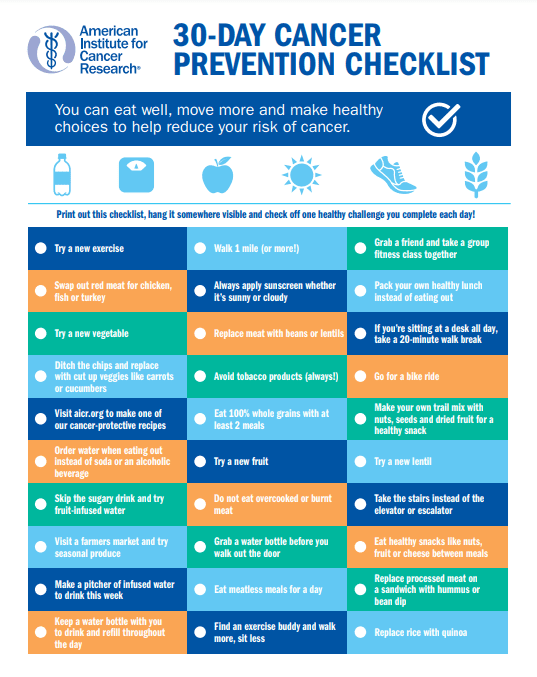
The American Institute for Cancer Research offers a free 30-day checklist to help you eat well, move more and make healthy lifestyle choices to reduce your cancer risk. Find it here along with other cancer prevention resources.
Resources
The https://www.aicr.org/cancer-health-check/American Institute for Cancer Research (AICR) Cancer Health Check helps you learn more about your choices and how you can stack the odds in your favor.
National Cancer Institute (NCI) Cancer Causes and Prevention


October is Health Literacy Month. A study by Health & Human Services Office of the Surgeon General showed that only about 12% of Americans have proficient health literacy skills. Unfortunately, many adults lack good knowledge about their medical condition and treatment, and don’t know how to get information that is presented in a way they can understand. People report having difficulty completing medical forms and relaying important details to their doctor about their health. They may not be able to accurately read directions to take their medicines as prescribed. Each of these common situations can be linked to poor health outcomes.


Recent Comments