

 A cancer diagnosis can make the world feel like it has suddenly shifted beneath your feet. You may be hearing unfamiliar medical terms, scheduling appointments, meeting new members of your healthcare team, and trying to make sense of information that can feel overwhelming.
If you’re wondering, “What do I do now?”—you’re not alone.
There is no single right way to respond to a cancer diagnosis, and you don’t have to figure everything out at once. Taking things one step at a time can help you feel more prepared and empowered as you move forward.
Give Yourself Time to Process
Before you start researching every possible treatment or outcome, take a breath.
A cancer diagnosis is a lot to absorb. You may feel scared, angry, confused, numb, or even relieved to finally have an answer. All of those feelings—and many others—are normal.
If possible, bring someone you trust to appointments. Having another person there can provide emotional support, help take notes, and make it easier to remember what your healthcare team shares.
Most importantly, give yourself permission to process this in your own way and at your own pace.
Learn About Your Diagnosis
Once you’re ready, start gathering information about your cancer. You may want to ask:
- What type of cancer do I have?
- What stage is it?
- Are additional tests needed?
- What are my treatment options?
- Who will be part of my healthcare team?
- What happens next?
- Should I consider getting a second opinion?
- Are there clinical trials I should know about?
You don’t need to become an expert overnight. Focus on understanding the information you need to make your next decision. And remember: it’s okay to ask your healthcare team to explain something again—or to explain it in a different way.
Get Organized From the Beginning
 A cancer diagnosis often comes with a lot of information: pathology reports, medication lists, appointment schedules, treatment plans, insurance paperwork, contact information, and questions you want to ask at your next visit.
Trying to keep track of everything in your head can add unnecessary stress.
This is where Bag It Cancer can help.
The Bag It Bag was created to help patients and caregivers organize important information and become active members of their healthcare team. My Companion Guidebook provides a place to keep track of appointments, medications, healthcare providers, questions, notes, treatment information, and more. The Bag is available in English and Spanish Bicultural versions.
A cancer diagnosis can leave you feeling like things are happening to you. Getting organized can help you feel more prepared to participate in what happens next.
Bag It also offers Cancer-Specific Bags with additional information and resources for people facing particular types of cancer.
If you don’t receive a Bag It Bag through your healthcare provider, you can explore available Bags and our Cancer Resource Center at Bag It Cancer.
Write Down Your Questions
It’s easy to think of an important question at home and completely forget it when you’re sitting in the doctor’s office.
Keep a running list of questions and bring it with you to every appointment. You might also consider keeping a notebook or using My Companion Guidebook to record answers and take notes.
Some questions to consider include:
- What does my diagnosis mean?
- What treatment do you recommend?
- What are the benefits and risks of this treatment?
- What side effects should I expect?
- How will treatment affect my daily life?
- Who should I call if I have questions or concerns?
- Are there supportive care services available to me?
- Are there financial resources that can help?
There are no “stupid” questions when it comes to your health. If something doesn’t make sense, ask.
Build Your Support Team
Cancer can be a lot to carry alone.
Think about the people you want in your corner. Your support team might include family members, friends, coworkers, neighbors, members of your faith or community, other cancer survivors, or professional counselors and social workers.
Be specific when asking for help. Instead of simply saying, “I need help,” consider asking someone to:
- Drive you to an appointment
- Take notes during a medical visit
- Help with meals or household responsibilities
- Pick up prescriptions
- Help with childcare or pet care
- Accompany you to treatment
- Simply sit with you and listen
And don’t forget about your emotional well-being. Cancer affects mental health as well as physical health. Talking with a counselor, social worker, support group, or other trained professional can be an important part of your care.
Be Thoughtful About Where You Get Information
 After a diagnosis, it’s tempting to search the internet for answers to every question that comes to mind. While information can be empowering, not everything you find online is accurate, current, or relevant to your particular situation.
Start with your healthcare team and trusted cancer organizations. Look for information that is evidence-based, clearly sourced, and written for patients and caregivers.
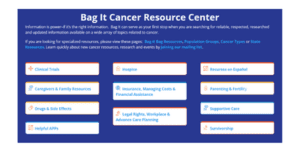
Bag It Cancer’s Resource Center brings together trusted resources covering cancer types, treatment, clinical trials, financial assistance, caregiving, survivorship, emotional support, and other aspects of navigating cancer.
Having reliable information in one place can help you spend less time sorting through conflicting information and more time focusing on the questions that matter to you.
Don’t Forget About the Practical Side of Cancer
Cancer doesn’t put everyday life on pause. Along with medical decisions, you may suddenly find yourself dealing with questions about work, insurance, finances, transportation, childcare, or other responsibilities.
These concerns are an important part of your cancer experience—and it’s okay to ask for help with them.
You Don’t Have to Figure It All Out Today
There may be a lot to learn after a cancer diagnosis. But you don’t have to learn everything today. Start with the next appointment. The next question. The next decision.
Gather information. Ask questions. Get organized. Build your support system. And give yourself permission to ask for help.
Since 2003, Bag It Cancer has been helping people affected by cancer feel more informed, organized, and empowered. Through the Bag It Bag, My Companion Guidebook, cancer-specific resources, and our online Resource Center, Bag It provides practical tools and trusted information to help patients and caregivers navigate the cancer experience.
Because you shouldn’t have to navigate cancer alone.
Let Bag It help you take the next step.
Additional Resources
CancerCare | Free professional support, support groups, educational resources, financial assistance, and resource navigation for people affected by cancer.
Triage Cancer | Practical information about health insurance, employment, disability, finances, and legal issues related to cancer.
SHARE Cancer Support | Support, education, and navigation services for people affected by breast and gynecologic cancers.
Bag It Cancer Resource Center | Trusted cancer resources covering treatment, survivorship, caregiving, financial assistance, emotional support, and more.
Bag It Cancer provides educational information and practical resources to help people affected by cancer become informed and empowered members of their healthcare team. Information provided by Bag It Cancer is not intended to replace medical advice from a healthcare professional.
Recent Comments